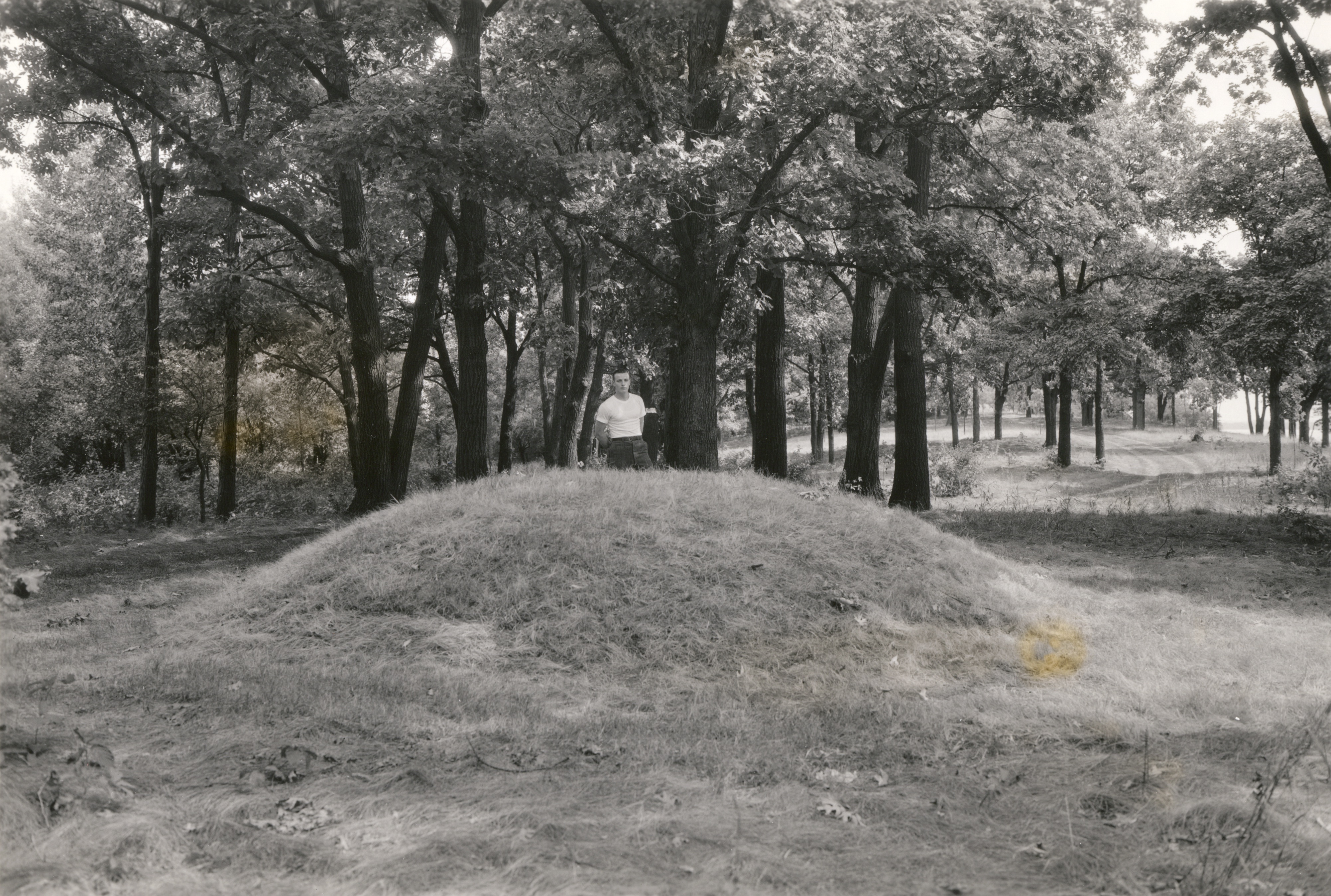
The following experimental digital documentary poem is composed of citations of William Ellery Leonard's new verse translation of the Old English poem Beowulf (1923), Leonard's personal experience narrative of taking part in archaeological fieldwork with Charles E. Brown at an Indigenous Ho-Chunk mound group on the shore of Lake Mendota, in an unpublished manuscript of an autobiographical case study located in the University of Wisconsin—Madison Archives (1920), and "Governors Island," a Ho-Chunk narrative of Lake Mendota by a storyteller once known, collected by Brown in Lake Mendota Indian Legends (1927).
When this MOUND web page is loaded and/or reloaded, server-side code selects and loads a random collection of lines from a relational database of citations:
To eat me, to sit round a feast on ocean's floor.
Not so much so (in my normal state). I ran down to where.
The local r**men. When they are angry they cause the waters.
But upon the morrow, wounded by the glaive.
(And myself something of an amateur). For a moment C. had.
(With a long curved tail) on the State Hospital lawn is said.
But unto me was given to pierce with swordsmanship.
However in supreme agitation and foreboding. And C.
The local r**men. When they are angry they cause the waters.
We did as we had vowed to! Our naked swords had we.
Not so much so (in my normal state). I ran down to where.
The local r**men. When they are angry they cause the waters.
Thus the loathly lurkers pressed me sore and oft.
With a close friend down to the lower end of the big lake.
The local r**men. When they are angry they cause the waters.
